- Phone: (248) 335-7740
- Fax: (248) 338-7979
Diabetes Devices and Technology
Diabetes Devices and Technology
According to the American Diabetes Association, “Diabetes technology is the term used to describe the hardware, devices, and software that people with diabetes use to help manage their condition… Historically, diabetes technology has been divided into two main categories: insulin administered by syringe, pen, or pump (also called continuous subcutaneous insulin infusion [CSII])… or continuous glucose monitoring (CGM). More recently, diabetes technology has expanded to include hybrid devices that both monitor glucose and deliver insulin…”
You may have heard that diabetes technology is rapidly advancing, and you’re right! We’re here to help you make the decision on the devices or medications that will allow you to best manage your condition.
Insulin Pumps
These small devices deliver insulin continuously under the skin. The reservoir inside the pump holds up to 200-300 units of insulin. Insulin is pumped through thin, plastic tubing, ending in a thin catheter under the skin but OmniPod® is tubeless since it is attached in its entirety to the skin and gets disposed of every 3 days. These external pumps (in the U.S. marketed as 780G/MiniMed, OmniPod/Insulet, T-slim and Mobi/Tandem, iLet/Beta Bionics and twiist/Sequel) cannot read sugar levels. Thus, the patient still has to monitor his or her own sugars either with fingersticks or by a continuous glucose monitor to be able to adjust insulin infusion rates (“basal” rates and mealtime “boluses”).
V-Go is a disposable insulin delivery device that sends insulin continuously under the skin at a fixed preset rate (basal) and is activated to deliver small amounts of insulin at mealtime. It is changed every day.
Cequr is a skin patch device which one activates for meal coverage One still needs to inject their daily long-acting insulin.
Automated Insulin Delivery
The MiniMed’s 780G, Tandem’s T-slim X2 and Mobi, BetaBionics’ iLet, Insulet’s Omnipod 5 and Sequel’s twiist systems are “hybrid” closed-loop devices (also called “automated insulin delivery devices or AID) representing the first step toward a fully automated insulin delivery. These pumps are wirelessly integrated with a continuous glucose monitoring sensor, which directs the pump to deliver the needed amount of insulin to keep blood sugar at a safe level. Patients still need to input the carbohydrate content before meals to activate insulin coverage of meals and snacks.
Continuous Glucose Monitoring (CGM)
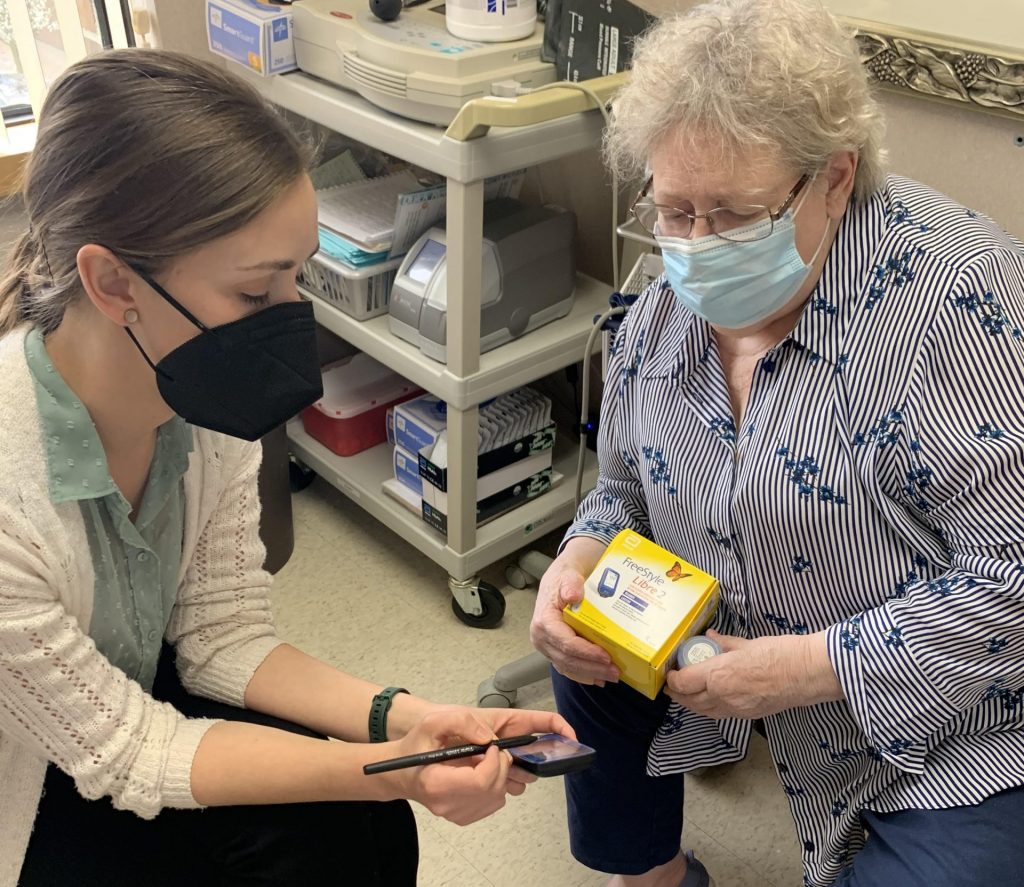
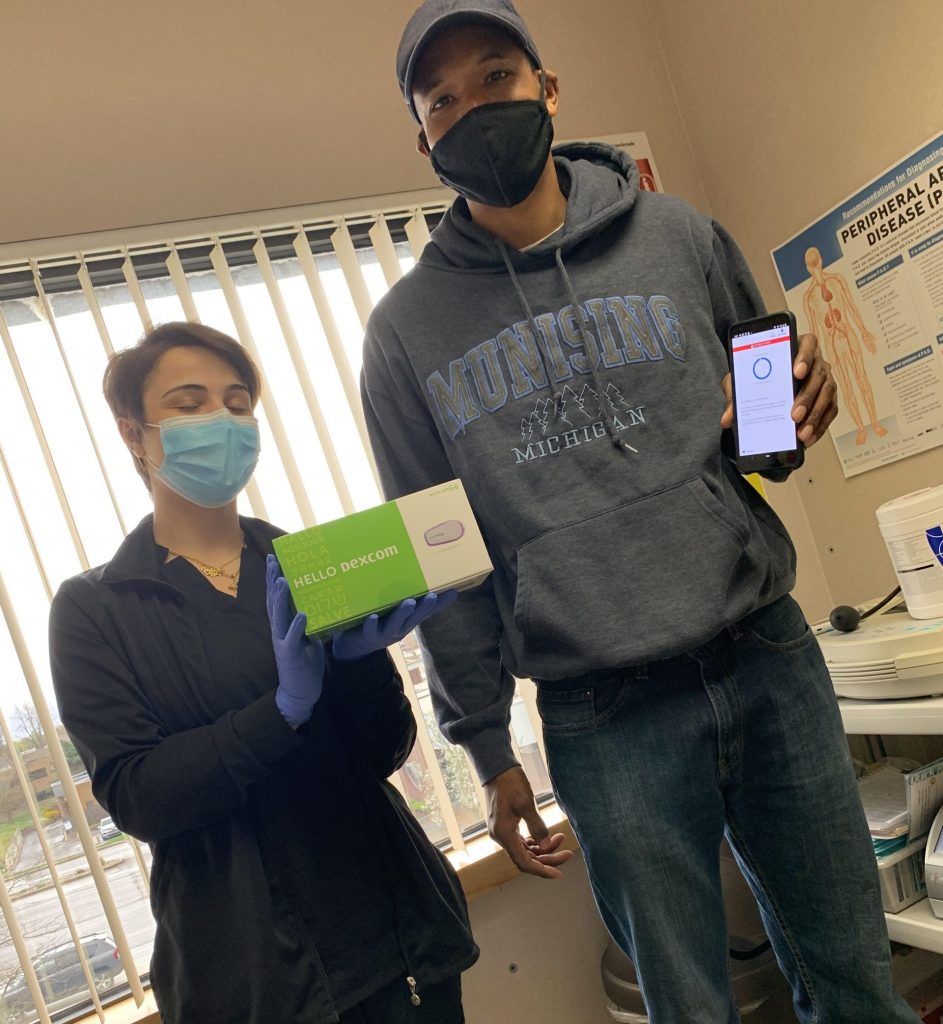
With fingerstick blood sugar, you see the result only at that given time. Continuous glucose monitoring (CGM) devices allow you to see not only the level at present but also look at past trends and see what will happen in the next 30 minutes, so you can take action even before the sugar goes too low or too high. These devices don’t check blood glucose levels, but the level in the fluid just under the skin, which usually corresponds to the blood glucose levels. There are several CGM systems on the U.S. market: Dexcom G6 (each lasts 10 days) and Dexcom G7 (10 and 15 days), Medtronic/MiniMed Guardian 4 (7 days), Simplera (7days) and Instinct (15 days), Abbott Freestyle Libre 2 Plus and 3 Plus (both 15 days), and the only implantable (sensor placed under the skin for 1 year) one, Eversense®.